
MDF or Laminate - Which to Choose for Furniture
Updated: · BauRaum
The question of MDF versus laminate comes up in almost every order, and there is no single right answer - both materials are good, but for different jobs. This article explains how they differ in construction, where each performs better, and how we make the decision when building custom furniture at the BauRaum workshop.
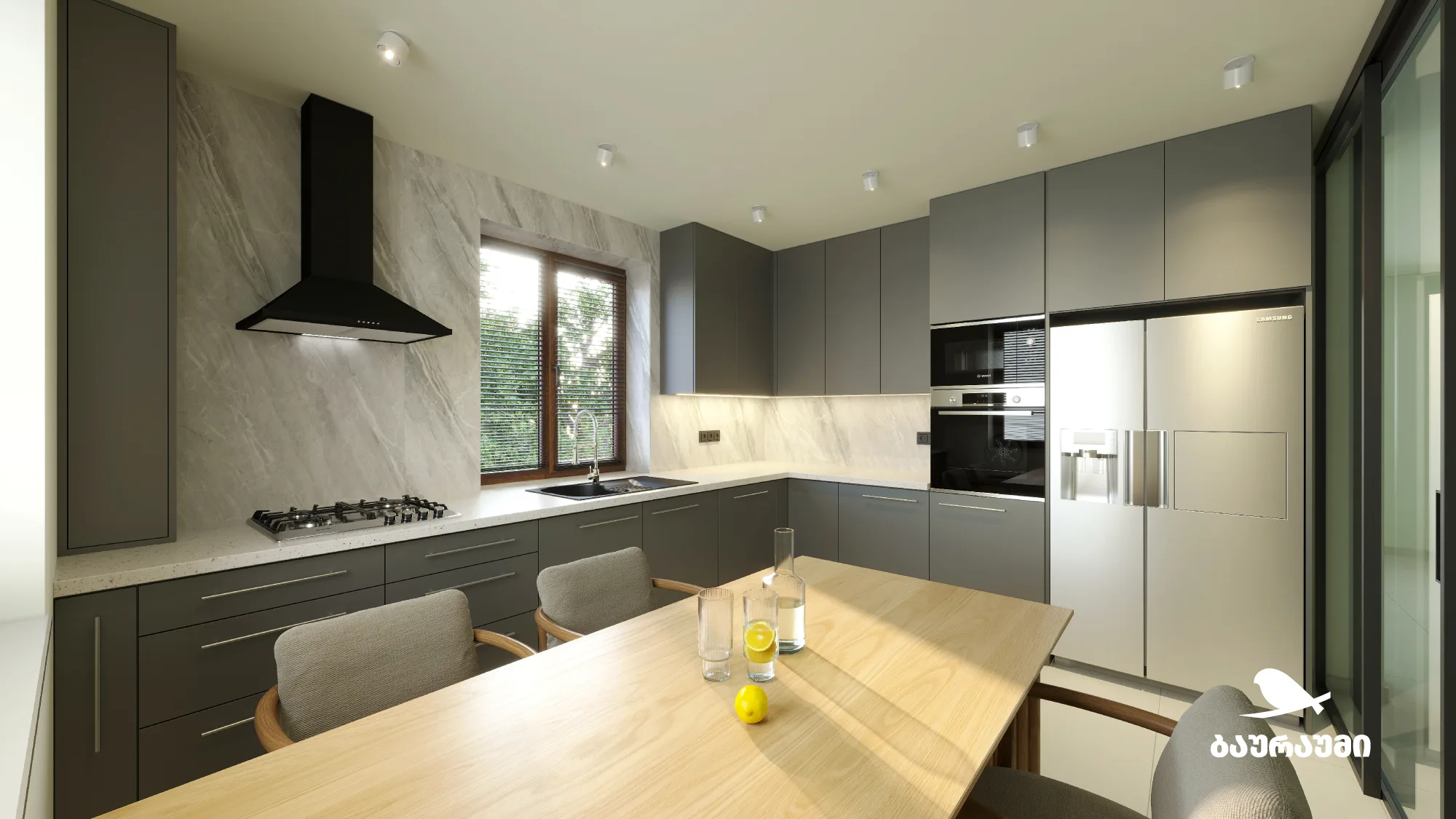
What laminate board (DSP) is and how it behaves
Laminate board, also called DSP, is a panel pressed from wood particles and finished with a decorative laminated layer. That layer creates the colour and texture and protects the material against scratches and moisture.
We work with Austrian and Turkish laminate. Its main advantage is the combination it offers: a durable surface, a wide colour range and the most economical price of the three materials.
Its limitation is form. Laminate performs perfectly in straight, geometric elements but cannot be milled, given a rounded profile or worked into complex relief. If you want decorative grooves or a classic profile on the front, laminate will not deliver it.
What MDF is and why it costs more
MDF is a medium-density fibreboard in which wood fibres are pressed far more finely and evenly. That uniformity delivers its main advantage: MDF can be cut, milled and painted while the edge stays clean and dense.
We work with Turkish MDF in three forms: laminated, painted and milled fronts. Painted MDF offers an almost unlimited colour range, including matt finishes that show fingerprints less.
The price is higher precisely because of the processing: milling and painting add production stages. In return, MDF is what produces the visual result you see in premium kitchens and living room furniture.
Where each material works better
For the carcass of a wardrobe or kitchen - the part that stays behind doors - laminate is almost always the right choice: durable, economical and with no effect on visible quality.
For visible fronts the choice depends on the design. If the project is minimalist with flat fronts, laminate is entirely sufficient. If you want a painted matt surface, milled grooves or a classic profile, only MDF will do it.
Wet areas follow their own logic: in bathrooms we often use moisture-resistant PVC board, and near built-in appliances we select material with thermal load in mind. That is why we never start a project with one blanket material choice - each zone is considered separately.
Combining the two - the most common practical answer
In practice both materials appear together in our projects, and that is not a compromise but a deliberate decision. Laminate for the carcass, MDF for the visible fronts: the budget stays under control while visual quality does not suffer.
Sometimes we mix materials within the fronts too: lower sections in dark painted MDF, upper ones in laminate with a wood texture. The contrast keeps the composition alive and lightens the budget.
The final choice is always made at the 3D visualisation stage. There you see how each option looks in your real space under your own lighting, so the decision no longer rests on a small sample fragment.
Care and durability in daily use
Both materials clean easily with a soft, non-abrasive product. The main rule is the same for both: never let water stand along the edges, particularly near the dishwasher and the sink.
The key factor in durability is not the material but the quality of the edge treatment. Damage starts at an untreated or poorly treated edge, where moisture gets in and swells the board.
The second factor is hardware: correctly fitted Blum and GTV hinges distribute the weight of the front evenly and keep the door aligned for years. Everything we build carries a written five-year warranty on structure and hardware.
Completed projects - MDF or Laminate - Which to Choose for Furniture


Frequently asked questions
For surface scratch resistance laminate is usually the tougher of the two, while MDF wins on edge quality and what can be done with it. In practice durability is decided less by the material than by the quality of edge treatment and hardware.
Laminate board (DSP) is the most economical solution. Laminated and painted MDF sit in the mid segment, and milled MDF costs more because it takes additional processing. Natural wood veneer belongs to the premium level.
Yes, and it is the most common answer: laminate carcasses with MDF on the visible fronts. The budget stays controlled and visual quality is not lost. We settle the combination together at the 3D visualisation stage.
For wet areas our main solution is moisture-resistant PVC board, alongside laminated or painted MDF fronts and quality laminate carcasses. Proper edge treatment is critical - that is where damage begins.
After measuring we prepare a free 3D visualisation where you see each option in your real space under your own lighting. You make the decision then, and change any detail you wish.
Ready to start your project?
Call or write to us - get a free consultation, a 3D visualization and an exact quote for your project.